Asian Center for Innovation Transfer (ACIT)
Director of the ACIT
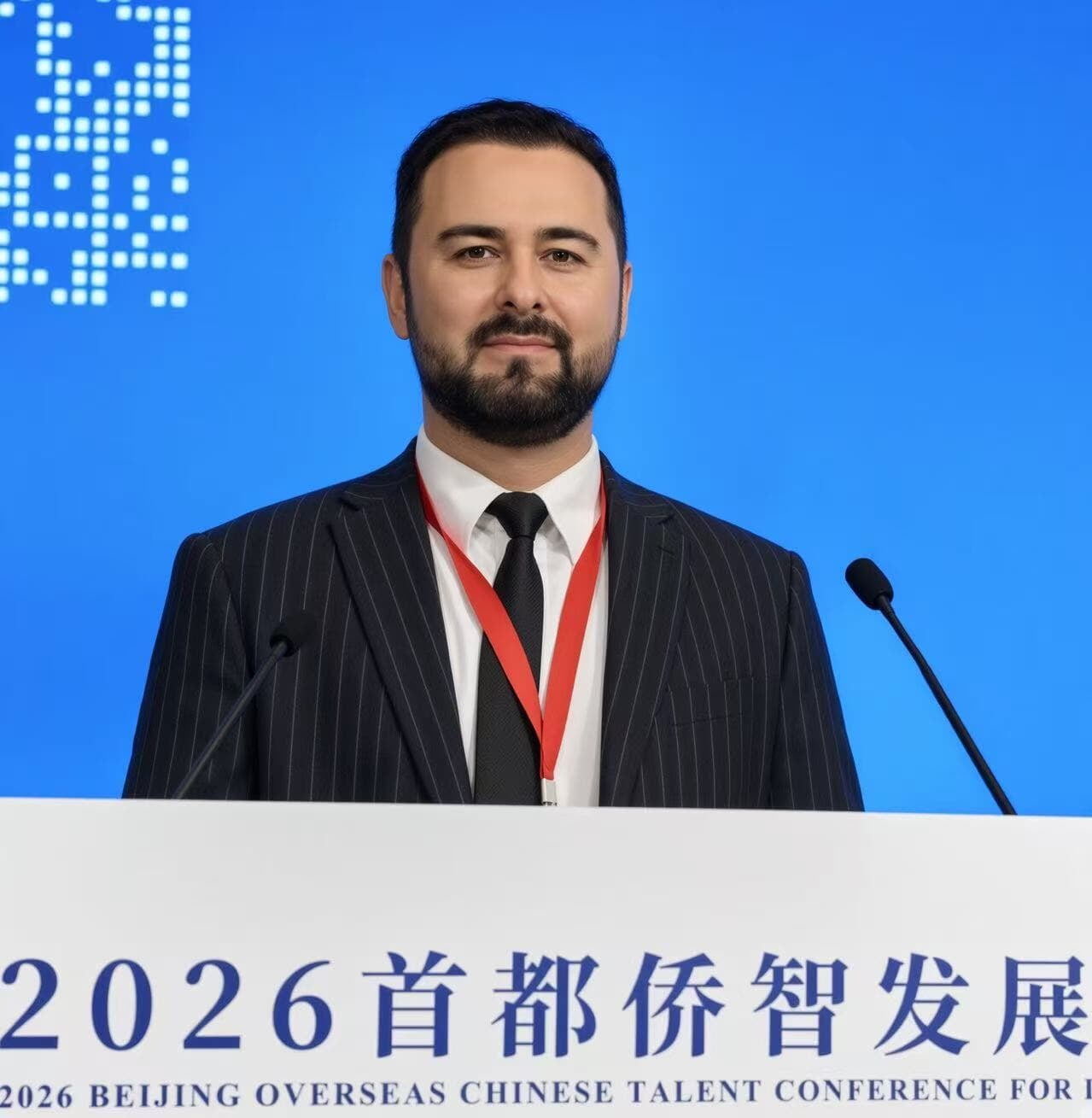
Dr. Farid Khalilov
Advisor of the President of AASc. Prof. Assist., DBA,
Associate member of the Asian Academy of Sciences,
Executive Director of the Asian Academy of Sciences,
Director of Asian Center for Technology Transfer (ACIT),
Chair of the Committee on International Relations of the AASc
Concept of the Asian Academy of Sciences for the Advancement of Innovative Technologies in Eurasian Countries
The Asian Academy of Sciences (AAS) is launching a new strategic concept aimed at the systematic deployment of cutting-edge innovative technologies—developed in Asia and other global regions—across the states of Eurasia. This initiative focuses on establishing effective knowledge and technology transfer mechanisms that will accelerate scientific and technological progress, drive economic and industrial modernization, and enhance the quality of science and education throughout the region.
As part of this strategy, the Asian Center for Innovation Transfer (ACIT) has been established.
Primary Objective of ACIT
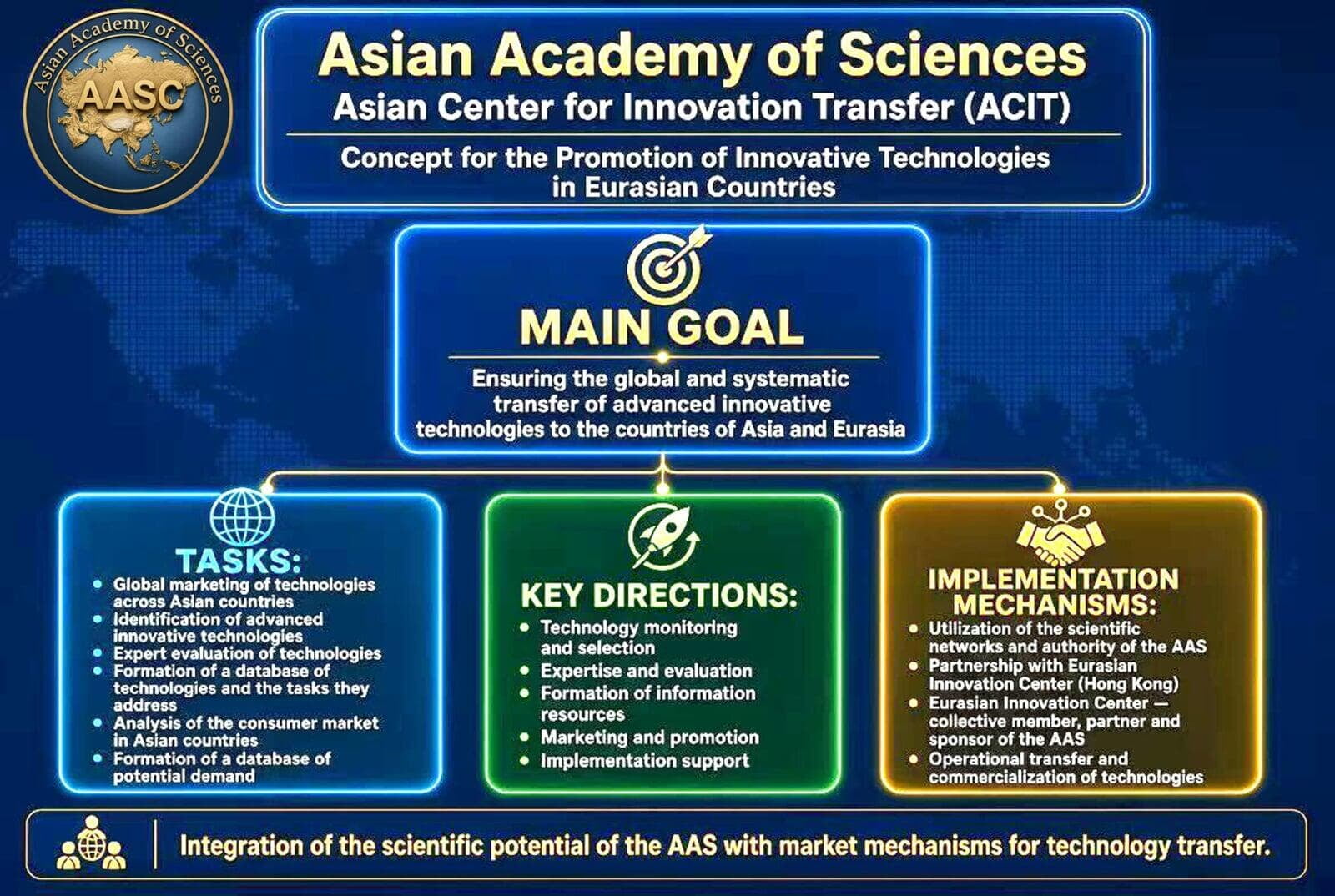
To enable global, systematic transfer of advanced innovative technologies to Asian and Eurasian countries through the identification, expert evaluation, marketing, and implementation of the most promising solutions, tailored to the specific needs of national markets.
Core Tasks of ACIT
- Global marketing of innovative technologies across all Asian countries.
- Identification of cutting-edge technologies developed in Asia and other regions.
- Expert assessment of selected technologies.
- Creation and maintenance of a database of innovative technologies, including the problems they address.
- Analysis of consumer markets in key economic, industrial, scientific, and educational sectors across Asian countries.
- Development of a database of potential end-users and market demand.
- Facilitation of practical implementation of selected technologies in target countries.
Main Areas of Activity
- Technology Monitoring and Selection
- Continuous search and selection of high‑potential innovations with high commercial viability and socio‑economic impact.
- Expert Review and Assessment
Independent, rigorous evaluation of technological solutions by leading scientists and specialists of the AAS. - Information Resource Development
Creation and ongoing enhancement of two interconnected databases: - Database of innovative technologies and their applications.
- Database of potential consumer demand by country and industry sector.
- Marketing and Promotion
Systematic promotion of selected technologies across Asian markets, leveraging the authority and networks of the AAS. - Implementation Support
Organizational, informational, and advisory assistance throughout the technology transfer and adoption process.
Implementation Mechanisms
The objectives of ACIT are pursued through the extensive scientific, business, and institutional networks of the Asian Academy of Sciences, as well as its established credibility across Asia.
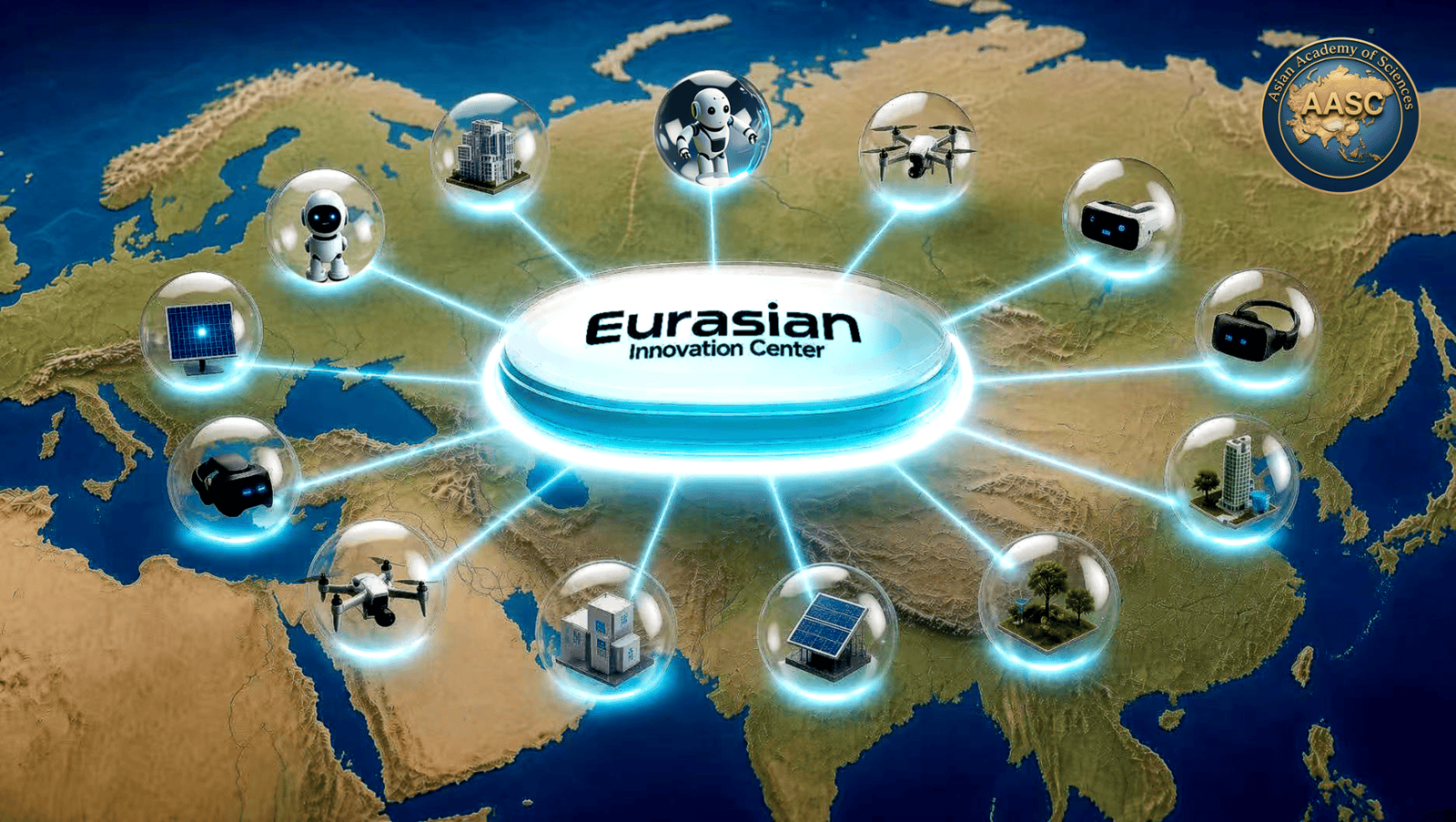
A key partner and operational vehicle for the practical execution of this concept is the Eurasian Innovation Center (incorporated in Hong Kong). The Center serves as a collective member, strategic partner, and sponsor of the AAS. Through this entity, operational activities—including marketing, technology transfer organization, and project implementation support—are carried out efficiently.
This structure enables the integration of the AAS’s high-level scientific expertise and advisory capacity with the flexible, market-driven mechanisms of commercialization and innovation promotion, thereby creating a sustainable technology transfer ecosystem that serves the interests of Eurasian nations.
The Asian Center for Innovation Transfer (ACIT) operates in accordance with the Regulations approved by the Bureau of the Presidium of the Asian Academy of Sciences.
The Asian Center for Innovation Transfer (ACIT) and the Eurasian Innovation Center cooperate on the basis of the Memorandum of Cooperation, in accordance with Part A, Section 4, Paragraph (12), Section 5, and Part B, Section 2, Article 14, Paragraphs (1)–(5) of the Charter of the Asian Academy of Sciences.